
AI Consulting for Small Business: What You Actually Get and What It Costs in 2026
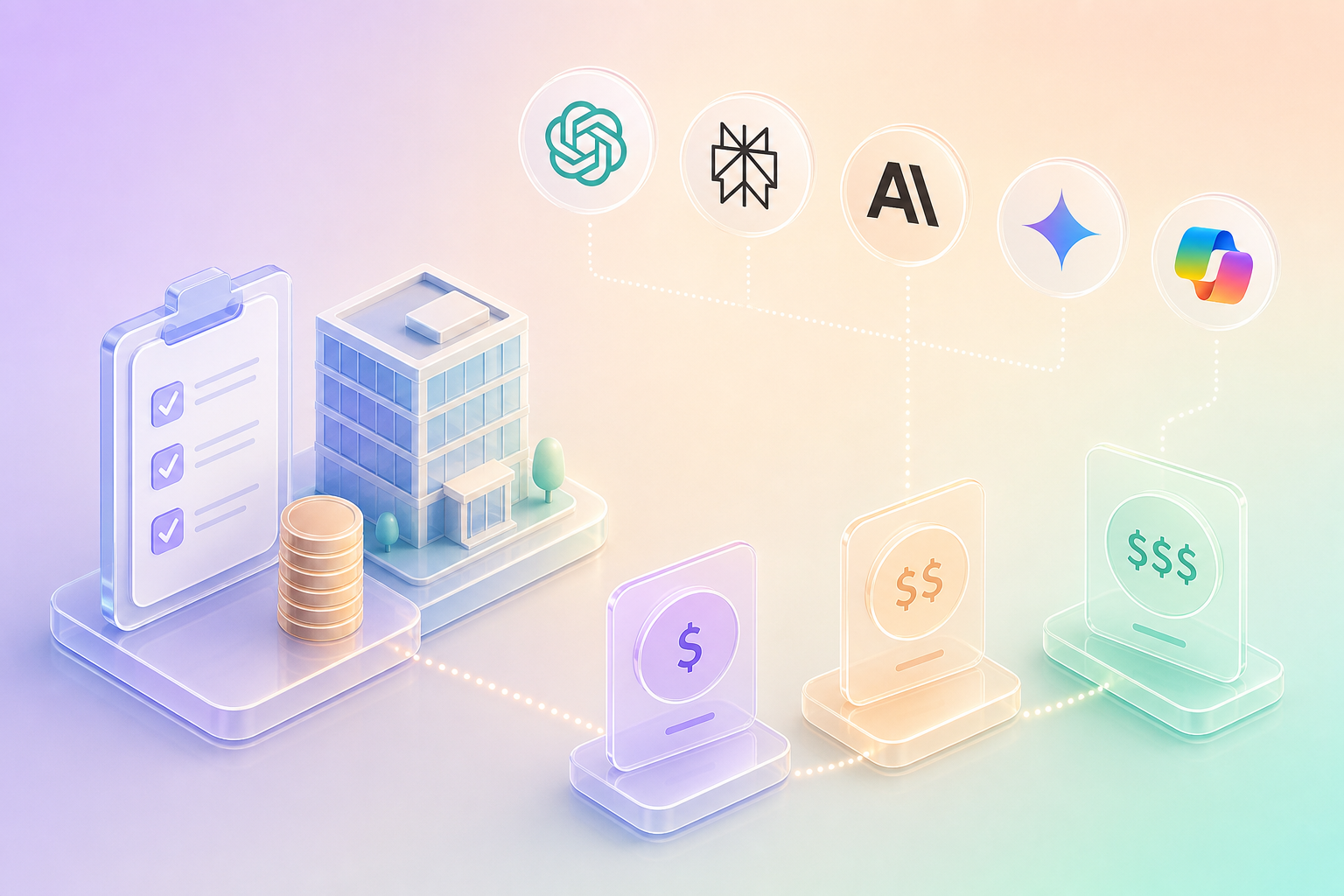
Quick answer: AI consulting for small business splits into three tiers. Big 4 and management consulting firms charge $200,000 to $500,000 for an engagement that small businesses cannot use. Boutique AI implementation firms charge $3,000 to $15,000 per month and actually build the systems. DIY using off-the-shelf tools is free but stalls inside ninety days because nobody owns implementation. Most small businesses should be in the boutique tier. This post explains why and what to expect.
---
Why Most Small Businesses Buy AI Wrong
Eighty-eight percent of organizations are using AI in at least one business function. Twelve percent see meaningful results. The gap between those two numbers is almost entirely explained by one thing: who is responsible for actually implementing it.
When a small business buys ChatGPT Team or Microsoft Copilot, they buy a tool and assume implementation will happen on its own. It does not. The tool sits unused, or used badly, by people who never had time to figure out how it fits their workflow. After three months the subscription gets cancelled and the owner concludes "AI does not work for us."
The business never had an implementation problem with the tool. It had a missing implementation function entirely.
That is what AI consulting fills.
---
The Three Tiers of AI Consulting
Tier 1: Big 4 and Management Consulting
Deloitte, Accenture, McKinsey Digital, BCG. These firms run large transformation engagements, typically twelve to eighteen months, with teams of ten or more consultants embedded in your business. They produce strategy decks, governance frameworks, and roadmaps. Implementation is often handed off to a separate systems integrator.
Pricing: $200,000 to $2M for a full engagement. The hourly billing rate for a partner is between $800 and $1,500. Even for a small engagement, you are looking at $50,000 minimum.
Who it fits: Companies with at least 500 employees, a Chief Digital Officer or VP of Transformation, and a budget line specifically for digital transformation. If you are reading this from a small business, this tier is not for you.
Tier 2: Boutique AI Implementation Firms
This is where Mi Assist AI lives. Boutique firms are small teams of three to fifteen people who specialize in AI implementation for small and mid-market businesses. They actually build the systems. They configure the agents. They write the prompts. They integrate with your existing tools. They train your team. They monitor and improve the system after launch.
Pricing: $3,000 to $15,000 per month for an ongoing engagement, or $5,000 to $50,000 for a fixed-scope project. The hourly equivalent is $150 to $300 per hour, but most boutique firms work on retainer or fixed scope rather than hourly.
Who it fits: Businesses with five to two hundred employees and revenue between $1M and $50M. You are big enough that operational inefficiency costs real money, small enough that you do not have an internal AI team.
Tier 3: DIY With Off-the-Shelf Tools
ChatGPT Plus, Claude Pro, Microsoft Copilot, Notion AI, GoHighLevel. Subscribe to a few tools, watch some YouTube tutorials, and try to figure it out. Total cost: $50 to $300 per month per user.
Who it fits: Solo operators and businesses with fewer than five employees where one person, usually the owner, has both technical comfort and time to experiment. If neither is true, do not start here. You will spend three months going in circles and conclude AI is hype.
---
What a Real AI Consulting Engagement Looks Like
We can only speak to how Mi Assist AI runs them. Other boutique firms vary. Here is the structure we use:
Week 1: Operational Audit
We sit with your team for a full day, sometimes two, mapping how work actually moves through the business. Not how it is supposed to move on the org chart. How it actually moves. Where does a customer inquiry land first. Who touches it next. How long does each step take. Where do balls get dropped. What workflows happen more than ten times a week.
The output of this week is a single document: a ranked list of automation candidates, scored by frequency, time cost, and implementation complexity.
Weeks 2-4: Pilot Build
We pick the top one or two automation candidates and build them. This is not slideware. By the end of week four you have working systems running in your business. A voice agent answering inbound calls. A workflow agent processing form submissions and adding contacts to your CRM with the right tags. An internal AI assistant trained on your knowledge base that your team can actually query.
Weeks 5-8: Pilot Operation and Tuning
The systems are live. Your team is using them. We monitor everything. Conversations the agent could not handle. Workflows that broke. Edge cases that surfaced. Every week we adjust prompts, retrain on new data, and patch the gaps.
By the end of week eight you have systems your team trusts.
Weeks 9-12: Scale and Handoff
We expand to the next tier of automations and document everything. Runbooks, monitoring dashboards, escalation playbooks. Your team can operate the systems without us.
After week twelve we move into a maintenance retainer at lower cost, or you take over fully and we step out.
That is the engagement. Twelve weeks, real systems running in production, your team trained, documented runbooks. Not a slide deck.
---
What to Pay and What to Expect
Here is the math.
A boutique implementation engagement at $5,000 per month for ninety days costs $15,000. The systems built typically save twenty to forty hours per week of staff time. At a fully loaded $40 per hour cost, that is $1,600 to $3,200 per week saved, $80,000 to $160,000 per year saved.
The payback period is typically eight to twelve weeks. The Versalence 2026 small business AI ROI study put the average return at 5.8x. We have seen higher in voice-agent-heavy implementations, lower in pure productivity automations.
What kills the ROI: stopping after the pilot. The first ninety days do the hardest part. The next ninety days compound on it. Businesses that treat AI implementation as a one-time project rather than an ongoing function leave most of the value on the table.
---
Five Questions to Ask Before Hiring Any AI Consultant
1. Show me a working system you built for a similar business. Not a slide. A screen recording or a live demo. If they cannot show working systems, they are slideware consultants and you will get a deck.
2. Who does the implementation work? Some consultants subcontract the build to overseas developers they do not manage. Ask who specifically writes the code, configures the agents, and trains the system. Ask to meet that person.
3. What happens after the engagement ends? A good consultant builds your team's ability to operate the systems. A bad consultant builds dependency. Ask for the documentation deliverables, runbooks, and training plan.
4. What is your monitoring and improvement model? AI systems degrade if nobody watches them. Conversations get weirder. Edge cases compound. Ask how the consultant catches degradation and what their tuning cadence is.
5. What is your stack and why? Beware consultants who use only one tool. Real implementation requires combining tools. We use Claude, ChatGPT, n8n, GoHighLevel, custom code, and OpenClaw depending on the use case. A consultant who only knows one tool will force everything into that tool whether it fits or not.
---
When to Skip Consulting Entirely
Some businesses should not hire an AI consultant. If any of these are true, start with DIY:
- Fewer than five employees
- Revenue under $500K per year
- No clear repeating workflows that take more than five hours per week
- The owner is the entire operations team and has the time to experiment
---
What Mi Assist AI Specifically Does
We are a Miami-based AI consulting firm at 218 NW 24th St Suite 302. We work with businesses ranging from ten-person service companies to two hundred-person mid-market firms. Our focus is implementation: voice agents, workflow agents, internal AI assistants, custom AI agents, AI SEO, and the integration glue that ties them into your existing tools.
We do not do strategy decks. We do not do governance frameworks. We do not pitch transformation. We build the systems, run them in your business, train your team, and step out.
If that fits how you want to work, we should talk. If you want a slide deck, you want a different firm.
---
FAQ
Q: How much should a small business expect to spend on AI consulting in 2026? A: Plan for $5,000 to $15,000 per month with a boutique implementation firm for an active engagement, or $3,000 to $8,000 per month for ongoing maintenance after the systems are built. Total first-year investment for most small businesses lands between $30,000 and $80,000.
Q: How long until I see ROI from AI consulting? A: Most clients see operational improvements (calls answered, workflows automated, time recovered) within thirty to sixty days. Financial ROI break-even typically lands at week eight to twelve based on the Versalence 2026 study and our own client data.
Q: What is the difference between an AI consultant and a software developer? A: A developer writes code. An AI consultant maps your business workflows, decides where AI fits, configures the AI tools, integrates them with your existing systems, trains your team, and monitors the systems after launch. Coding is one small part of the work.
Q: Do I need to have a technical team to work with an AI consultant? A: No. The whole point of hiring a consultant is they bring the technical capability. You need a clear operations point of contact (often the owner or COO) who can answer process questions and approve changes.
Q: What if my business is too small for boutique consulting? A: Start with DIY using ChatGPT Team or Claude Pro and a structured course. When you outgrow that (typically when you have ten or more employees and clear repeating workflows), move to a boutique firm. Skip Big 4 entirely.
---
Curious if AI consulting makes sense for your business? Book a free implementation assessment and we will map your three highest-ROI automation opportunities in the first thirty minutes. No deck. No pitch. Real numbers.
Ready to show up in AI search?
We get local businesses cited in ChatGPT, Perplexity, and Google Gemini within 90 days.
Learn About AI Search Optimization